
Holyoke Previous Resident Sources
A backward address trail uses records from different eras. The Hampden County Registry of Deeds supplies ownership transfers and legal descriptions. Holyoke directories and street lists supply printed names associated with a street address on their publication date. Census images add household relationships, while maps explain a building or street context. None of those sources is a full list of who lived at an address. Together, they can separate an owner, a tax-mail recipient, a printed directory entry, and a census household.
| Source | Years It Covers | Where Held | What It Shows |
|---|---|---|---|
| Hampden deed records | 1636-present; full index after January 1, 1948 | Hampden Registry and online index | Transfers, parties, legal descriptions, mortgages, liens, and other instruments |
| Holyoke city directories | 1869; 1873-1876; 1882-1991 | Holyoke History Room; selected digital access | Printed name, occupation or household clue, and address |
| Holyoke street lists | 1986-2011 | History Room | Dated address and name listings |
| Federal census | Images through 1940; later release follows the federal 72-year rule | Library databases and federal sources | Household relationships, age, birthplace, occupation, and enumeration location |
| Sanborn and municipal registers | 1895 map; registers 1850-1968 | History Room | Building context, street clues, city departments, and institutions |
| Permits and code material | Complete public online run not verified | City department request | Public work, applicant or owner, dates, inspection, and plans where releasable |
Begin with the source nearest to the date in question. For a recent owner change, start with the Registry and assessor. For a resident before 1940, a directory and census comparison may be stronger. For a structure that seems to predate its present number, bring in the Sanborn map and 1911 atlas before assuming the number alone identifies the same place.
Holyoke Address Records First
The current starting point is the City of Holyoke's FY2026 Property Assessment Data on Patriot WebPro. An assessor result is useful for the owner of record, a parcel or map-lot identifier, the situs address, and the tax mailing address. The tax mailing address can differ from the situs, so it is a correspondence clue rather than proof of where a person lives. Assessed land, building, and total values are fiscal assessment fields, not a statement of occupancy or a current sale price.
Copy the property address and parcel identifier exactly as displayed. A later Registry search can use the owner name, address, municipality code HOL, recorded date, or book and page. Keep the separation clear: a parcel owner may not be every past resident, and a printed directory or census name may not be the owner. That distinction prevents one record type from being used to answer a different question.
Note: The accessible WebPro landing page did not expose its exact live form controls, so confirm field labels and matching behavior in the portal before relying on a result.
Holyoke Records Deed Chain
The Hampden Registry deed index holds land records from 1636 to the present. Its online record copies are free. Certified copies are available from the Registry in person or by mail for $1 per page. After January 1, 1948, the index is fully searchable; the Registry also says computer indices are available from 1966 to the present. Search the latest transfer, read its legal description, and then use the seller's name as the next earlier buyer. A mortgage, discharge, or lien can name the parcel without being a transfer, so read the document type.
- Find the current owner of record and the situs or parcel identifier in the Holyoke assessment record.
- Search the Registry by party, address, town code HOL, date range, or book and page to locate the latest transfer deed.
- Record the grantee, grantor, recording date, document type, book and page or instrument number, legal description, and plan references.
- Search the prior seller as a grantee, using the legal description and address to confirm the same property.
- Repeat from later grantee to earlier grantor, checking Recorded Land and Registered Land when a search is empty.
- Grantor
- The party transferring an interest in a recorded instrument, usually the seller in a deed.
- Grantee
- The party receiving an interest, usually the buyer in a deed.
- Chain of title
- The sequence of recorded transfers used to follow a parcel backward through owners.
- Legal description
- The lot, plan, book-and-page, or boundary language that identifies land more reliably than a changing street number.
Open the official Hampden Registry search before beginning a deed chain.
The Registry index provides the party and reference trail needed to move from a current parcel record into earlier recorded transfers.
Holyoke Past Records Before 1948
Older Hampden deeds require a different route. Pre-1948 records can be searched online through scanned grantor and grantee index books, but the scanned search is name-based. Choose the relevant party role, enter the surname, narrow by year when useful, read the index page and nearby entries, and note the book and page. Then use Book and Page search to retrieve the image. A broad modern address search will not replace this step for an older deed.
Search both party roles when a transfer direction is uncertain. The earlier owner may appear under a name variant, trustee, estate, or abbreviated form. Compare the legal description, plan, surrounding owners, and recorded date before adding an entry to the chain. The Registry's online index is a powerful starting point, but it is not a title examination and does not prove clear title or occupancy.
Note: A pre-1948 index page leads to a book and page reference, so retain its year band and adjacent names with the citation.
Holyoke Registry Alert Myth
A Registry property-fraud alert is not an address monitor or a title search. Hampden's free alert service searches by name, so it can generate a notice for someone with the same name. Subscribe with the names relevant to the property, inspect the recorded item when an alert arrives, and contact the Registry if the document is unfamiliar. The service is a useful warning channel, but the deed image and its legal description remain the records to examine.
Holyoke Past Residents in Directories
Ownership is only one part of a past-resident search. The History Room's city directories can show a printed name at an address, while its street lists create a later dated address-and-name layer. The directory collections themselves have their own access routes and entry conventions, summarized on the Holyoke city directories page. For a house history, use the street section to find the address in a target year, then read the alphabetical entry for spelling, initials, occupation, spouse or household clue, and any residence notation.
The Holyoke History Room is at 250 Chestnut Street in the library's third-level gallery. It keeps the local directory shelf near newspapers, maps, yearbooks, and subject files that can test a name or address. Listed regular hours are Tuesday 10-2 and 3-6, Wednesday 10-4, and Thursday 10-4. Secure materials can require advance notice.
Check the History Room access information before using its directory sources.
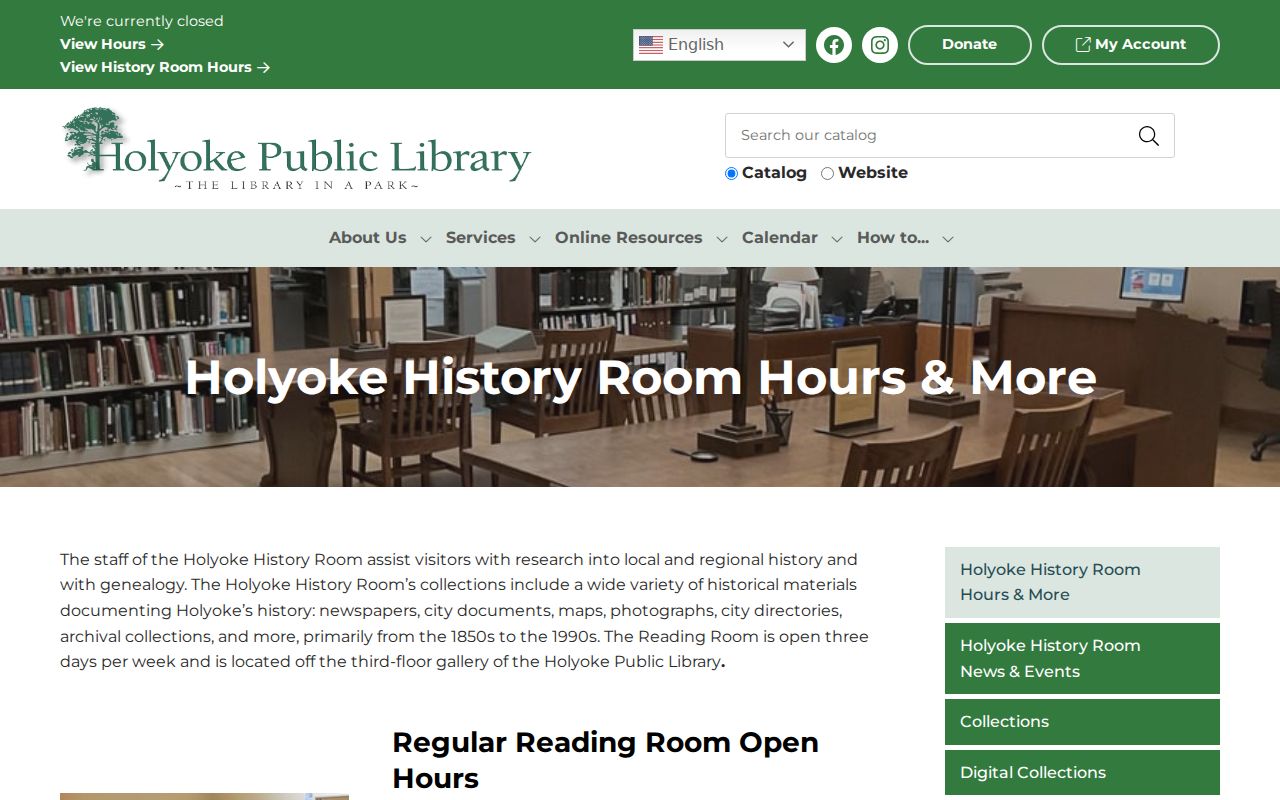
Library maps, directories, and local publications let a past-resident trail move beyond an ownership name into a dated neighborhood context.
Holyoke Directory and Census Years
Pair a directory date with the nearest available census instead of treating either as a complete household record. HeritageQuest, available through the library for cardholders at home or on a library computer, includes federal census images through 1940. A census can add relationships, ages, birthplaces, and enumeration location. A directory can supply the intervening address, a business clue, and a printed household form. Compare the dates first, then record what each source actually says.
- Start with a directory or street-list year that places the address in a narrow period.
- Check the same or nearby name in the nearest census year, including household relationships and enumeration location.
- Return to directories before and after the census to identify a move, changed initials, or a later address.
- Use a deed, probate file, obituary, or map as a separate endpoint when the household disappears from the printed trail.
Review the Holyoke Library genealogy databases for current HeritageQuest, Ancestry Library Edition, and American Ancestors access conditions.
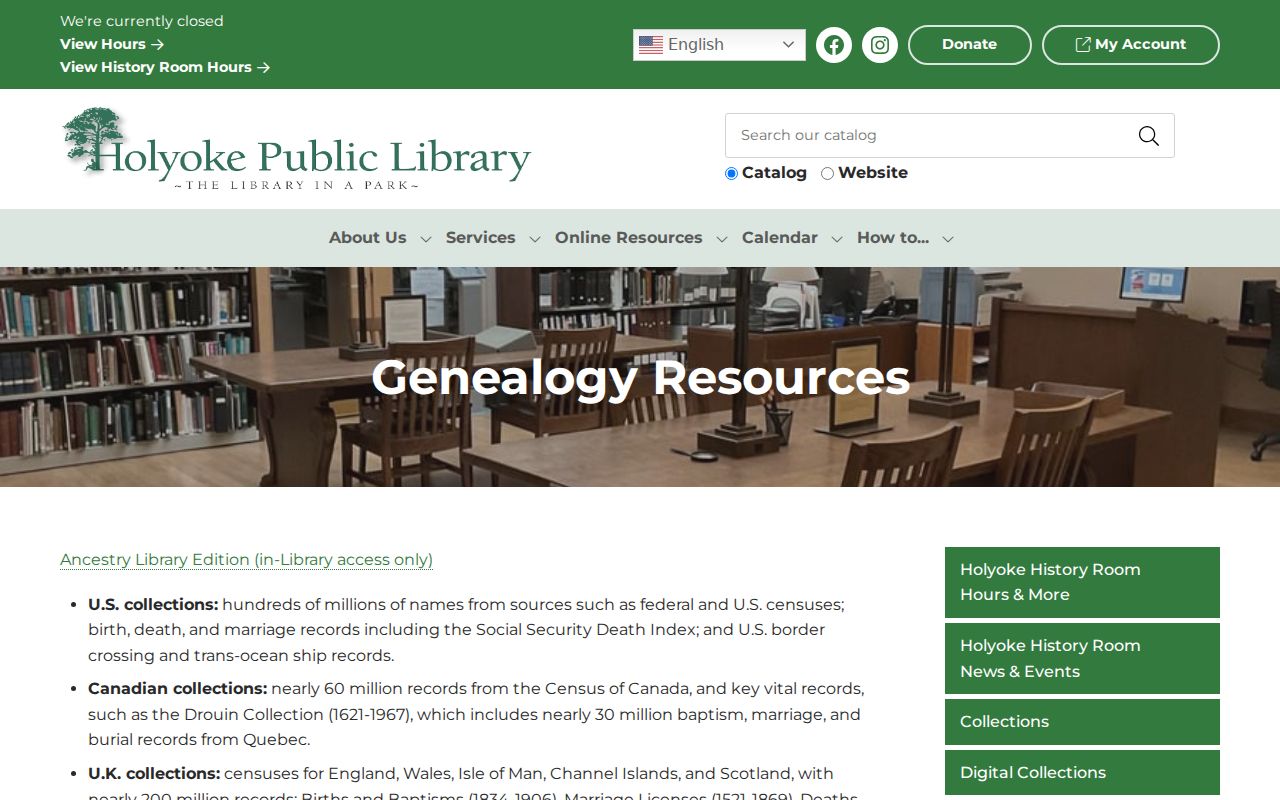
The library's digital route helps compare directory observations with census images, but a search hit still needs an image and date check.
Note: A census household and a directory entry can describe different dates, so preserve both publication or enumeration dates in the research notes.
Holyoke Maps for Old Addresses
When a number no longer seems to fit a building, maps are the bridge. The library's verified 1895 Sanborn map can identify a block by intersection and show a building footprint, construction, use, neighboring structures, and street-number context. Richard's Atlas of Holyoke from 1911 offers another map-era reference. Compare those sources with the current parcel shape and the deed's legal description. A map can establish physical context; it does not name a resident by itself.
The most persistent northern boundary issue is Smith's Ferry. It was annexed from Northampton to Holyoke in 1909. Older deeds, directories, and descriptions may therefore use Northampton, Smith's Ferry, or an older village reference. Bridge the records through cross streets, map sheets, legal descriptions, surnames, and adjacent owners rather than treating a modern street number as the only key.
Holyoke Address Record Endpoints
A property trail can end with a transfer, an estate, or a building event. Probate petitions, estate deeds, obituaries, and newspaper notices may explain why a name leaves an address. Use them as separate records. An obituary may name relatives or an event date, while probate or a recorded estate deed can establish a formal estate connection. Newspaper statements should be checked against a custodian-held primary source where possible.
Permit information can help date construction, an addition, demolition, or an applicant's involvement. A public searchable Holyoke permit-result database was not verified. Instead, send a focused Massachusetts Public Records Law request under M.G.L. c.66, §10 to the city department or Records Access Officer. Identify the address, date range, parcel, permit number if known, and owner or applicant. Ask for a fee estimate and expect redaction of protected or exempt material. Do not assume a permit proves who occupied a property.
For heir work, Massachusetts' Unclaimed Property search is a separate name-and-address cross-check. A claimant must prove ownership or heirship; it is not an address locator.
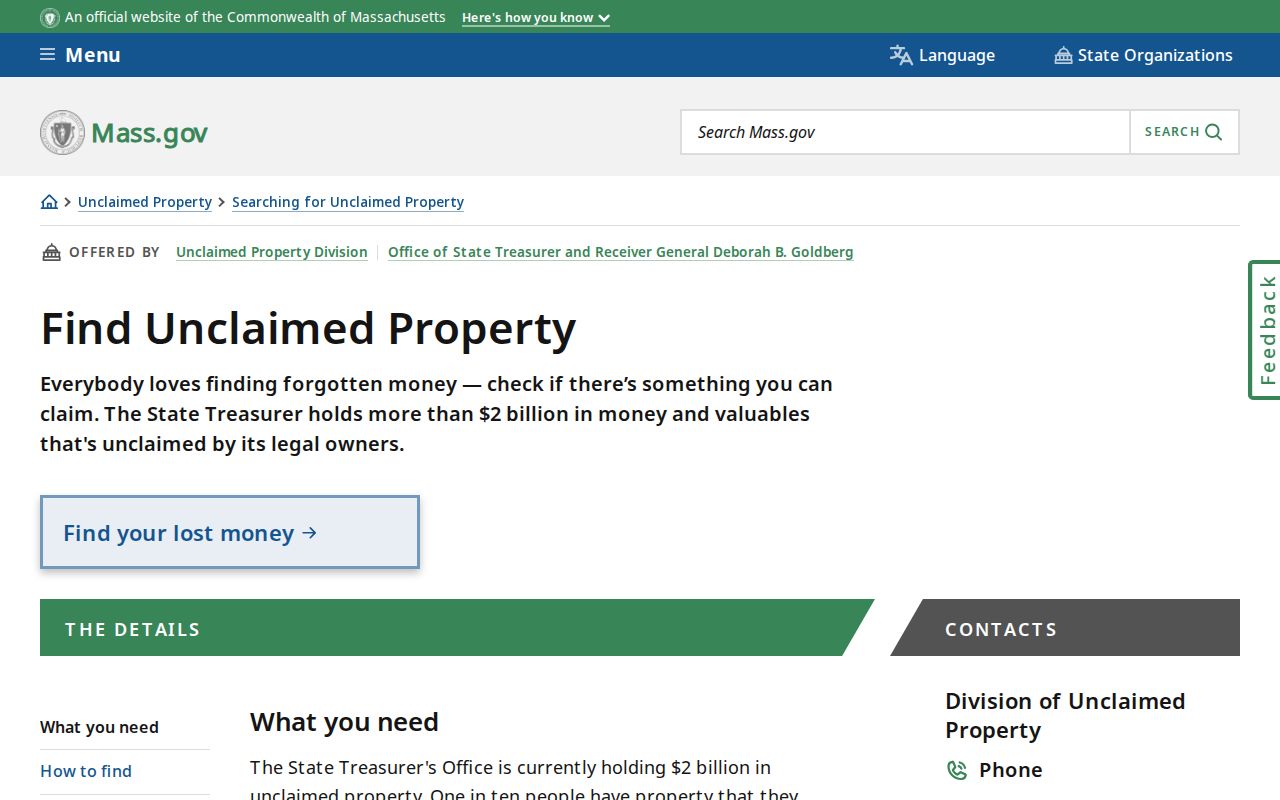
An official unclaimed-property result can support a carefully documented heir inquiry, but it should be paired with probate, recorded deeds, and other matching records.
Note: A city-record request should identify the address and date range precisely, because broad requests may take longer to locate and review.
Holyoke Previous Residents in Smith's Ferry
Smith's Ferry is a jurisdiction bridge, not an automatic records gap. Because it was part of Northampton until the 1909 annexation, older material can be cataloged or indexed outside a modern Holyoke search. Test the historical place name and use the land description, surrounding owners, and historical map evidence to connect the old entry to the present parcel. A name absent from a Holyoke-only search may be a cue to change the jurisdiction and date range.
The same discipline applies to any older address that appears under a village label, mill landmark, or plan reference. Record the wording exactly and keep each link in the chain tied to a date. That approach is more reliable than forcing every historical source into a modern address format.
Holyoke Previous Resident Limits
Past-resident research is strongest when it stays factual and dated. A deed proves a recorded instrument, not every occupant. A tax mailing address is not a situs address. A directory or census entry is a statement for its own year, not a current-location claim. Other household members, protected voters, and Address Confidentiality Program participants may not appear in public parcel or local-list records.